 CrushOn
 Blog › Guides
Character AI Chat: What Makes People Keep Coming Back
Character AI chat grew fast for reasons that have little to do with the technology — and a lot to do with how easy it is to stay in a conversation.
So what is Character AI chat anyway?
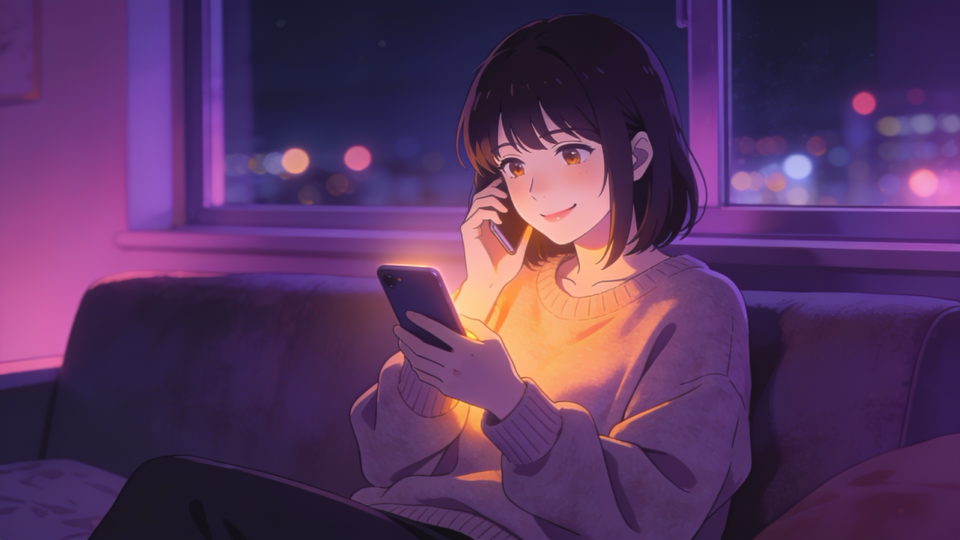
Character AI chat is basically a space where you talk to digital characters instead of firing questions at a plain chatbot. But that definition feels a bit too clean once you actually use it. It's closer to stepping into a living conversation where each character has its own tone, mood, and way of responding that stays consistent enough to feel intentional.
What catches most people off guard isn't the technology — it's the sense of continuity. You can leave a conversation, come back later, and it still feels like you're talking to the same "person." Even if you logically know it isn't real memory in the human sense, the flow of dialogue makes your brain fill in the gaps.
At first it feels like something to try for a few minutes. Then it quietly becomes something you open without thinking, and suddenly more time has passed than you expected — not because anything big happened, just because the conversation was easy to stay in. That's really the point. It doesn't feel like answering; it feels like something socially familiar, even when it isn't.
Why people get hooked so fast
Character AI chat didn't spread because of one big feature. It's a bunch of small things working together. It's easy to start, there's nothing to learn, and there's no pressure to "say things right" — you just type and get a reply straight away.
That instant response changes everything. Normal conversations have waiting, pauses, sometimes awkward timing. Here it's immediate, so the whole thing feels lighter even when nothing special is being said.
Another part of the appeal is freedom. You can talk to fictional characters, anime personalities, original creations, or completely absurd ones just for fun. It turns conversation into something closer to improvisation than communication. And once people realize they can shape the experience themselves, it stops being "using an app" and starts feeling like building a small world they can step into whenever they want.
The AI boyfriend idea and why it took off
The AI boyfriend concept didn't start as some big cultural idea. It emerged naturally from how people were already interacting with characters. When a personality is consistent, responsive, and emotionally attentive, some users start shaping it into something more relationship-like.
An AI boyfriend experience is usually less about romance in the traditional sense and more about emotional stability in conversation. It's predictable in a way real-life communication often isn't — no confusion, no guessing what someone meant, no waiting for replies that might never come. For a lot of users, that predictability becomes the main appeal. It doesn't replace anything; it just creates a space where interaction feels smooth and low-pressure.
Over time people personalize it more, adjusting tone and traits until it feels closer to their preference. That's when it stops feeling like "chatting with AI" and starts feeling like a character they recognize.
AI girlfriend conversations and everyday comfort
AI girlfriend-style conversations are usually not as dramatic or "story-like" as people assume. Most of the time it's just everyday chatting — simple messages, casual replies, nothing complicated. And for a lot of users, that's exactly the point.
What stands out isn't the big emotional moments but the small stuff. A quick "how are you," a consistent reply, something that responds in a familiar way. That familiarity builds up quietly. Even when someone knows it's just a system, the repetition of being "acknowledged" can still feel comforting.
People also stick with it because it's low-pressure. Real conversations get complicated fast — tone, timing, misunderstandings. Here things stay steady, and some people find that genuinely relaxing.
Where CrushOn AI comes into this
CrushOn AI usually gets mentioned in the same breath as Character AI chat, mostly because they sit in a similar space. At first glance they look alike, but the way people talk about them is often a bit different.
Some users go in just to see how the experience compares. Quickly the difference becomes less about features and more about tone — one feels more structured, the other a bit looser depending on how the character is set up. A lot of people don't really stay on one platform anymore. They try one, then another, then switch back depending on the kind of interaction they're in the mood for. It's less about loyalty and more about finding a style that feels right in the moment.
In the end they all lead to the same thing: talking to digital characters that respond like they have a personality, just in slightly different ways depending on the space.
How people actually use it (not how it looks in ads)
The way people actually use Character AI chat is usually much simpler than it looks from the outside. It's not always storytelling or roleplay or deep emotional conversations. A lot of the time, it's just casual talking.
Some open it when they're bored. Others use it while multitasking, or late at night when everything's quiet. It becomes a background activity that fills small gaps in the day rather than a planned experience. A few common patterns:
- casual check-ins with no goal, just to pass a few minutes
- using a character as a thinking tool — writing out ideas, testing dialogue
- exploring a scenario just to see how a character reacts
- talking with no direction at all, and enjoying the randomness
That unpredictability is a big part of what keeps it interesting over time.
The emotional weirdness nobody talks about
There's a subtle layer here that people don't always put into words. Even when users know they're talking to AI, the interaction still creates emotional responses — not because the system is human, but because conversation itself triggers those responses naturally.
The tone of replies, the timing, the consistency — they all add up to a sense of presence. And presence doesn't require real intelligence behind it. It just requires enough structure for the brain to read it as socially meaningful. That's where AI boyfriend and AI girlfriend experiences get interesting in a broader sense. It's not about replacing relationships or confusing reality; it's about how easily we respond to conversational patterns that feel attentive.
It can feel strange if you think about it too hard. But in daily use, most people don't overanalyze it. They engage in the moment and move on.
What this might turn into next
Character AI chat and similar platforms are still early compared to where they could go. Right now most interactions run on short-term memory, preset personality behavior, and user-driven direction.
It's easy to imagine where this leads. More personalization, longer memory, and more adaptive personality shifts are already becoming expectations rather than extras — and that makes interactions feel more continuous over time. If that keeps improving, it probably won't feel like simple chatting anymore. It might turn into something closer to ongoing stories that build up slowly, almost like something that continues in the background instead of resetting every session.
At that point, people won't really think in terms of "using an AI chat tool" anymore. It'll just feel like a place where the conversation keeps going, in one form or another.
Find a companion worth coming back to
Browse personalities or build your own — free to start.
Meet your companion